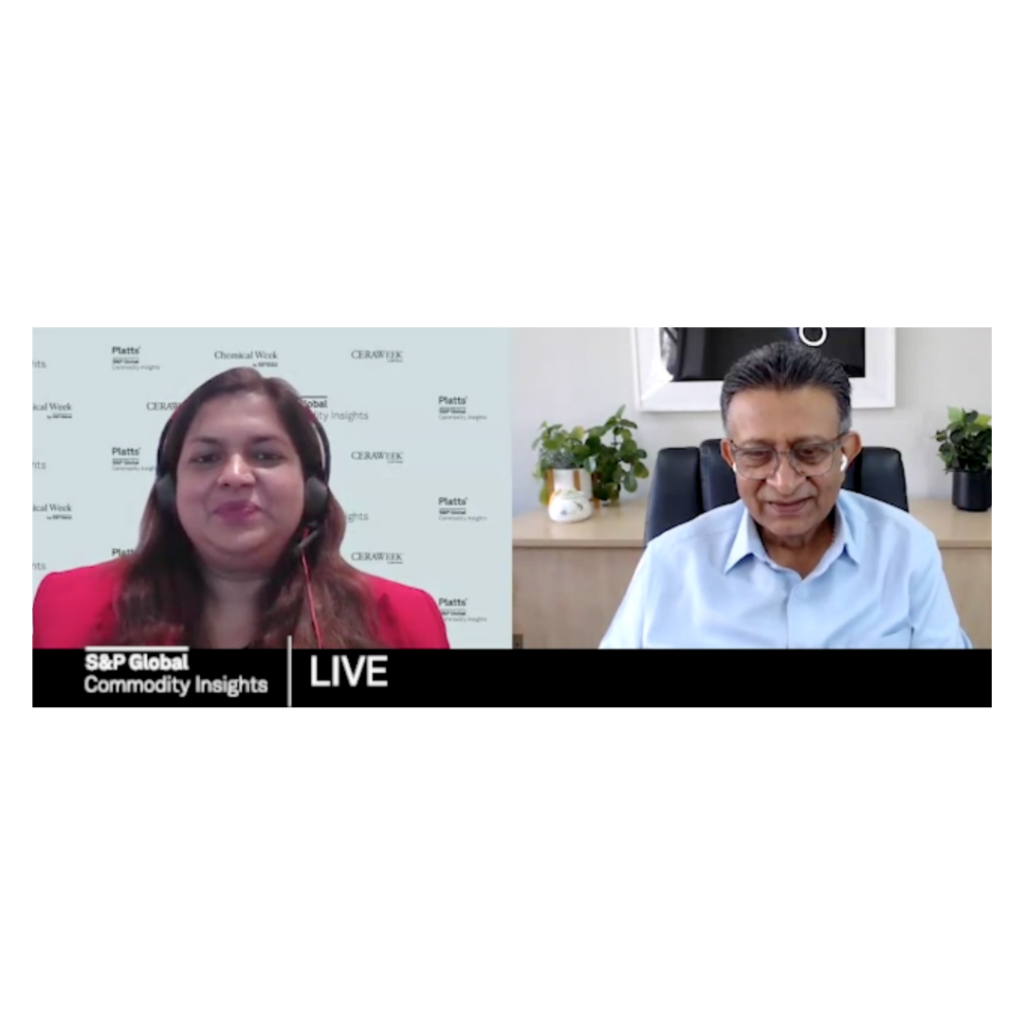
Join S&P Global Commodity Insights for a two-part interview series with our partner, International Lithium Association (ILiA) on Multiply.
The first part of the series covers the role of lithium, a critical mineral; in global decarbonisation highlighting how the low price environment is impacting the industry, supply-chains and investments, and how the SPGCI and ILiA partnership benefits the industry.
Featuring Shivani Singh, Associate Regional Pricing Director EMEA-Metals at SPGCI, based in London and Anand Sheth, Founding Chairman, ILiA, a not-for-profit industry association. Anand is based in Perth, Australia and has 28 years of industry experience in various roles including manufacturing, research & development, project consultancy, sales and marketing.
1. Lithium has a key role to play in decarbonisation with its use in electric vehicle batteries. What role does China, the top lithium consumer, play in supply chains, investments etc
That is very true.
Without lithium batteries, it is impossible to transition to a renewable and decarbonised economy.
The transport sector is one of the main sources of CO2 emissions. Electric vehicles (EV) contribute to improving air quality and human health.
Lithium has become a central element of global climate policies and energy transition strategies aimed at decarbonizing the planet.
The recycling potential of lithium-ion batteries offers us a clear roadmap to a more sustainable & circular global mobility sector.
The Chinese government’s policies and incentives over the past 15 years are seeing benefits now. In the early 2000’s China through its National 5-year development plans mandated targets with a clear vision to decarbonise its economy.
According to a recent S&P Global Commodity Insight analytics Report the PEV penetration rate in China in June hit a record 48.4%, but a slowdown in economic growth has impacted overall car sales.
It has taken at least 15 years for EV’s to become competitive with ICE vehicles in China.
As you mentioned, China is the top lithium consumer, BUT, it has built its internal supply chain relying on the supply of lithium raw materials (i.e. feed materials) from Australia and South America. The entrepreneurs in China knew from very early on the criticality of secure lithium raw material supply chains. They invested and signed long term offtake agreements to secure such supplies. They are mainly responsible for planting the seeds of green and brownfield expansions of lithium resources globally that we see today!
It is ILiA’s endeavour that all the major economies come together and cooperate, collaborate and share knowledge in order to fast track the path towards a common goal of a decarbonised economy and a sustainable future!
2. Lithium, which has been called “white gold” and compared to “new oil”, has witnessed a persistent low-price environment for a while, for example, Platts, part of S&P Global Commodity Insights, assessed spodumene concentrate FOB Australia was at $760/mt on Aug 21, about 91% below the record highs of $8,200/mt posted in Nov 2022 , what is the impact to the industry and new project investments?
The term ‘white gold’ is better than ‘new oil’ as gold is recyclable, and oil is not. Once oil is consumed, it is converted into energy and pollution.
Lithium batteries can be re-used and recycled just like gold!
Regarding the pricing, it depends on the benchmark or reference used. Pre-2017, the price for say LC) was below US$6,000/ and today Platts, a part of S&P Global Commodity Insights, mentions Lithium carbonate CIF North Asia closed Aug 21 at $10,500/mt There was a very short-term volatility that caused the LC prices to spike to $78,200/mt in Nov 2022 (OR close to US$80,000/t. )(US$8,000/t SC6?? TBC)
It is important to understand that the lithium battery sector is in the nascent stage / early growth phase and such volatility reflects this.
Irrespective of the pricing environment, the low-cost producers are growing capacities and expanding for the future demand. It is all supply and demand economics.
For example, one of our founding members, Pilbara Minerals recently announced its acquisition of Latin Resources and its plans to proceed with its P1000 expansion plans.
Another founding member, and the world’s largest lithium producer and refiner, SQM, recently entered into a cooperation agreement with the state-owned copper company CODELCO, which secures the continuation of activities in the Salar de Atacama until 2060.
The challenge is that post Covid, overall costs have dramatically increased and this means tough times for some of the newer and higher cost producers.
Certain projects should secure investments and we should see more mergers and acquisitions happening with large multi national companies entering into this sector.
3. We have recently joined ILiA as a member. As a not-for-profit industry association what role is ILiA playing for its members and how do you see the ILiA -S&P Global Commodity Insights partnership benefitting the industry?
Firstly, may I, on behalf of the Executive Committee of ILiA and its Members welcome you and S&P Global Commodity Insights to the lithium community!
As you know, ILiA is not even 3 yearrs old and yet is growing strongly to become the global voice of lithium.
With more than 70 members across the whole lithium value chain, it is a truly international organisation.
ILiA is bringing various parts of the supply chain, governments, information providers together to work towards a cleaner and a greener future!
We are honoured to have S&P on board with us. Your high reputation and recognition are very valuable to our members. Especially your Insights on not only the lithium sector but in general, on the global economy will greatly help our members to develop their own internal strategies for successful outcomes.
Knowledge shared is knowledge gained! This only strengthens the global voice of lithium and I thank you and S&P Global Commodity Insights for this!
4. Argentina, Bolivia and Chile have been called the “Lithium Triangle” in terms of their potential to be a major lithium supplier. What are the challenges this region is facing?
May I firstly make a bit of distinction here please? I would instead call this a Lithium Brine triangle whereas Japan, South Korea and China are Lithium Battery -angle or triangle! Currently, the lithium units travel mainly from South America to the Far East & China!
The resources in this region of South America are primarily brine resources.
The main challenges are high altitude, developing suitable extraction technology, skills, manpower, and due to its remoteness, infrastructure like power, water and gas. Also, these projects require a long lead time of say about 10 years to come into production.
Both Chile and Argentina have more than 25yrs of experience of lithium production. Chile’s Salar de Atacama is one of first and largest sources in this region, with SQM and Albemarle operating from this brine, and Arcadium in Salar de Hombre Muerto in Argentina. All these three companies are ILiA founding members.
There are many new greenfield projects that are under exploration, development and commissioning stages. We will see a lot more production of this critical mineral coming out from this region in the short to medium term with support from the governments here.
Every atom of lithium is needed on this journey to a sustainable future!
5. There have been many regulations like the Critical Raw Materials Act (CRMA) in the EU, the EU, Canadian and US tariffs on Chinese EVs and other mandates that are impacting the lithium and li-ion battery markets. What are the major regulatory and policy hurdles that the lithium industry is facing and how is ILiA working with its members and government bodies to prepare for them?
Let me firstly state that ILiA is a not for profit association and is non-political. We have members from all over the globe, roughly 20% from each of Australia, North & South America, EU, and China, etc.
I believe that the tariffs that you mentioned could be one more strategy that the Governments hope to support and fast track the growth of their domestic or regional lithium battery value chains until they become competitive. There are similar examples in other industries too.
Coming to the question on policy hurdles, currently, lithium is produced mainly in the OECD Countries and has traditionally met the respective government regulatory and Stock Exchange guidelines.
ILiA runs subcommittees on Sustainable Lithium and on Responsible Production and Sourcing for its members, where we discuss and exchange regulatory and policy updates with our members
One of the main regulatory challenges that ILiA is currently involved in, is the proposed new EU reprotoxicity or toxic to reproduction classification of lithium salts: lithium carbonate, hydroxide, and chloride.
ILiA along with Eurometaux is working to understand what a suitable and appropriate classification would be, as in our opinion it clearly does not qualify to be grouped into a Class 1A substance.
The respective expert bodies from the Governments of Australia, Argentina, Chile, the USA, the UK and Canada have all written to the EU questioning their proposal. We are waiting to see their final report. And we continue to work with the EU on it.
6. What are the noteworthy technological innovations in lithium extraction and processing or Li-ion battery making that the industry should look forward to?
The lithium industry is currently at the nascent or early stage of growth. The whole lithium battery value chain and EV’s are about a decade old. With an exponential growth forecast, there are many technological innovations anticipated right cross the whole value chain.
Some important ones are the Direct Lithium Extraction (DLE) for salt lake brines, oilfield and geothermal brines.
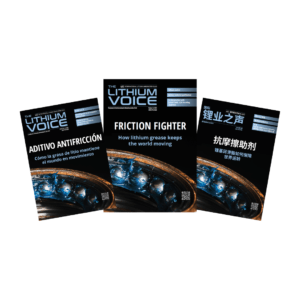
ILiA’s June edition of the Lithium Voice magazine talks about DLE.
In the refining of lithium mineral, spodumene, there are a few different processes under development. Instead of the standard sulphuric acid leaching process, Metso has developed a direct alkaline leach process and POSCO’s bi-polar electrodialysis technology to produce LiOH. There are few other technologies under development at the lab scale or pilot scale.
In the battery active materials, a lot of developments are ongoing with the cathode, anode and electrolyte materials. The aim is to achieve a battery that would have the highest energy density, highest safety, faster charging times and be cost competitive.
Solid State Batteries could be a future potential. The other technologies in the battery sector that we hear are in lab scale stage are lithium sulphur and lithium air.
Exciting times for the lithium sector, no doubt!
7. What is the lithium industry and ILiA doing in terms of improving recycling and reuse of lithium and would recycled lithium be deemed similar to prime?
It takes time to build a recycling industry.
As I have said before, this is also in the nascent stages, as lithium batteries currently have a life of between 7 – 10 years in EV’s and then potentially a second life in other applications like energy storage sector or some other new applications that we haven’t yet considered, before finally being recycled.
The recycled lithium that is currently produced is sold to cathode active materials makers or in other traditional applications like glass and ceramics.
In China, the largest market, we see the recycling industry growing..
The recycled lithium must compete on price with the prime products.
Governments are implementing policies on re-use and supporting the initial growth of the recycling sector. The EU is taking a lead in this area with its policies and targets. ILiA does provide its views on this topic to those that reach out to us.