John Linden recalls the early days of lithium in Australia

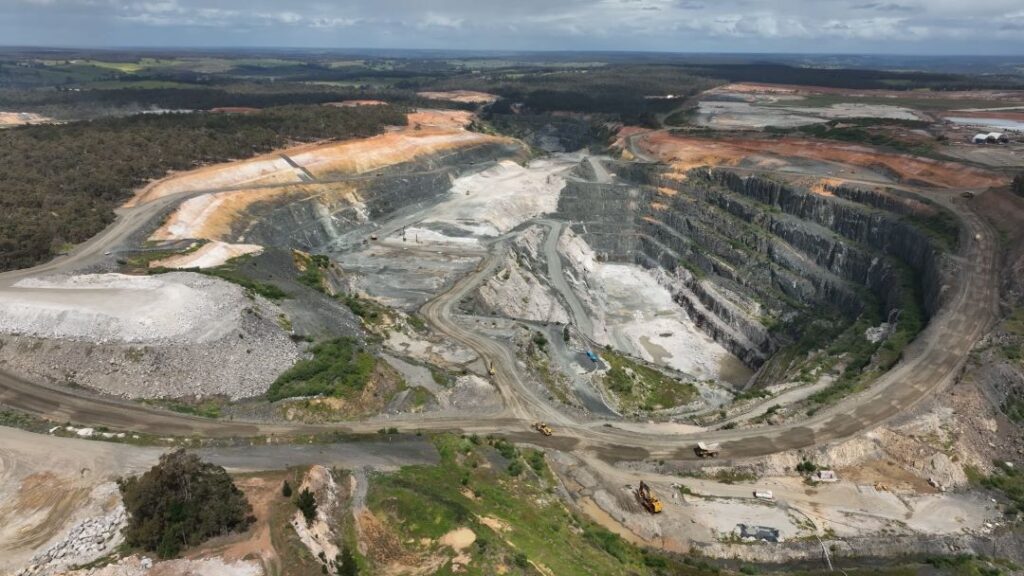
The Greenbushes mine in Western Australia is the world’s single largest lithium mining operation producing 1.5 million tonnes of spodumene concentrates annually.
The success of this powerhouse excavation project is due in no small part to the efforts of John Linden, a visionary geologist, miner and entrepreneur whose management team identified the lithium-bearing potential of what had previously been a tin and tantalum operation.
In his new memoir, Mining the Memories, John recalls how the growth of the Greenbushes mine coincides with the exponential rise in global demand for lithium as new battery technologies came onstream from the mid-1980s.
When John got involved in Greenbushes in 1973 it was primarily a tin mine, albeit one with large amounts of tantalum in the tailings.
Demand for tantalum, which is used for capacitors in computers and telecommunications, was growing but mines in Canada and Brazil were almost exhausted.
In 1980, Greenbushes announced that it had probable reserves of 9.7 million tonnes of tin and tantalum ore, but did not mention any lithium reserves.
That same year two Greenbushes employees, Mike Hatcher and Dave Allen, visited the Tanco tantalum operation in Canada. The Hungarian academic who showed them around offered to take them to the spodumene site which was mined with ores containing 1.5% lithium oxide (Li2O). Mike recalled thinking “People are making a business of mining this crap and we’ve got much bigger.”
In 1981, Mike led a drilling programme which revealed reserves of 11 million tonnes of high-grade lithium oxide. Greenbushes was the world’s largest and richest lithium deposit.

Lithium was initially mined as 4% Li2O spodumene ore by open-pit method. It was then processed through the company’s tantalum floatation plants to produce spodumene concentrate at an impressive 7% – 7.5% Li2O.
At the time of the discovery the market for lithium was small – it took three years for Greenbushes to find its first lithium buyer – and primarily focussed on the manufacture of glass and ceramics but that was about to change.
In 1985 Akira Yoshino, a Japanese chemist, achieved the breakthrough in lithium battery technology that allowed Sony to start commercialisation (see The Lithium Voice, Vol 1).
As personal electronic devices became widespread, demand for lithium batteries increased. By the 1990s Greenbushes was supplying lithium to Cheng Du Lithium Salts Factory in China for the production of lithium hydroxide for batteries. Greenbushes was the only supplier of spodumene concentrates to the lithium refineries in China until about 2010. It remains the largest producer and supplier.
When John left the mining business in 2000 he handed the marketing reins to the safe hands of Mike Tamlin and Anand Sheth (Co-founder and Chair of ILiA).
Mining the Memories is an exciting and readable insight into the emergence of Greenbushes as the world’s biggest lithium mine.
Editor’s note: Today Greenbushes is owned by Talison Lithium Pty Ltd, a private company owned under a joint venture arrangement by Tianqi Lithium Corporation/IGO Ltd JV (51%) and Albemarle Corporation (49%).