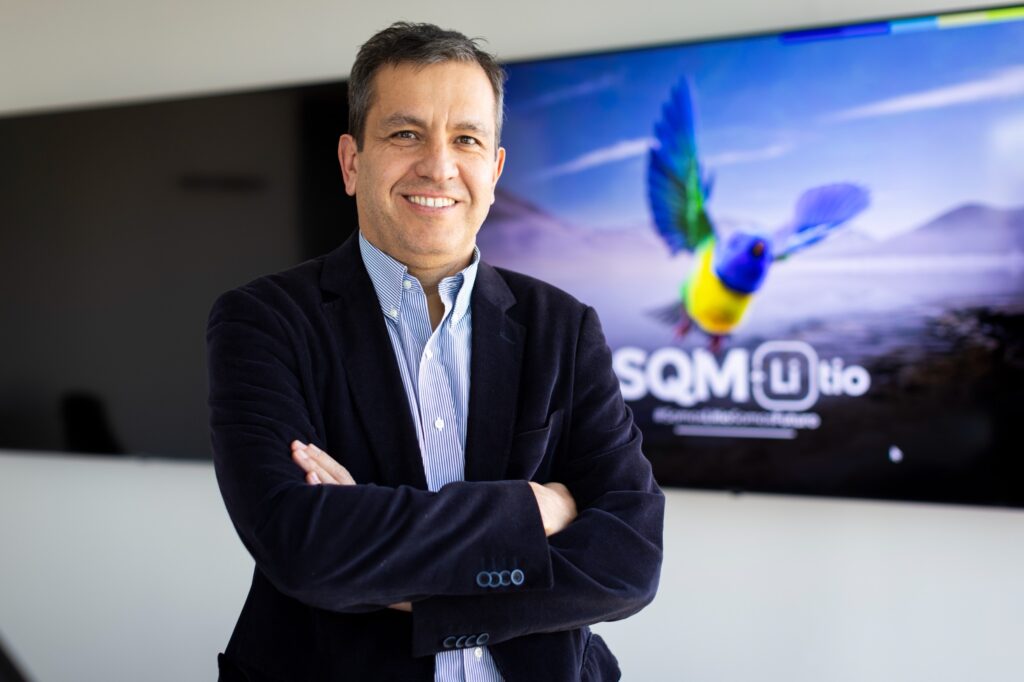
Carlos Diaz is the Executive VP Lithium at SQM, a world-leading lithium producer based in Chile.
What drives you when it comes to lithium, and what is your vision for its future?
Lithium is at the heart of the global energy transition, powering everything from electric vehicles to renewable energy storage. My motivation is to ensure this transition is not only fast and efficient, but also responsible and lasting. By 2035, I envision a lithium industry fully aligned with sustainability goals − where innovation across extraction, processing, and recycling drastically reduces environmental impact. With lithium demand projected to triple by 2035, the sector must evolve in parallel: adopting new technologies, strengthening circularity, and building transparent, resilient supply chains. Chile has a unique opportunity to lead this transformation. With vast reserves, strong institutions, and a growing innovation ecosystem, it can set a global benchmark for developing strategic resources that benefit both people and planet.
SQM was the first lithium producer to achieve the IRMA75 accreditation. How does SQM work to meet ESG guidelines and lower its environmental footprint?
At SQM, sustainability is not just a buzzword, it’s truly at the core of everything we do. We are constantly looking for ways to innovate and improve our operations to meet the highest industry standards, and IRMA is one example of that commitment.
In Chile, we produce lithium chloride from brine in the Salar de Atacama using solar evaporation, which makes the process highly energy-efficient. The lithium chloride is then refined into lithium carbonate and lithium hydroxide at our Antofagasta facility, the largest lithium refinery in the world.
Additionally, today we produce lithium sulfate from brines with high sulfate content. This allows us to recover streams that, until just a few years ago, were not utilized. These streams are now transformed into a strategic input for the subsequent production of battery-grade lithium carbonate and lithium hydroxide, allowing for operational flexibility in response to evolving market needs.
What truly sets our lithium apart is its low environmental footprint. Independent life cycle assessments and third-party studies have shown that our lithium has among the lowest carbon and water footprints in the global industry. We’re proud of that, and we’re working hard to reduce those numbers even further.
Water is a critical resource, especially in arid regions like the Atacama. That’s why responsible water management is a key part of our strategy. By 2028, we aim to reduce our brine extraction by 50% and, in the future, eliminate the use of continental water altogether. These goals are supported by our sustainable innovation roadmap, Salar Futuro.
We’ve already made significant progress: we have successfully reduced over one third of the authorized brine extraction, while also reaching our target of a 50% reduction in water pumping.
Behind these efforts is a team of scientists and hydrogeologists who have studied the Salar de Atacama for almost 30 years. Their expertise help us monitor and manage water resources more effectively. We have also established an online monitoring network with more than 225 hydrogeological monitoring points and over 300 biotic monitoring points across the Salar. This information is made publicly available at www.sqmsenlinea.com to ensure transparency for all our stakeholders.
Our IRMA75 accreditation is another important milestone. It not only validates the progress we’ve made, but also challenges us to keep improving. For SQM, being a sustainability leader means committing to a continuous journey – one that depends on collaboration, transparency, and a constant willingness to evolve.
How does SQM engage with the local community? What initiatives are in place?
Our relationship with the communities surrounding the Salar de Atacama is the result of many years of ongoing collaboration. It’s important to understand that we’re not talking about just one community. There are around 23 distinct communities in the region, each with its own priorities and expectations.
At SQM, we believe that long-term success goes hand in hand with the well-being of the people living in the area where we operate. That’s why our approach is based on mutual respect, open and ongoing dialogue, and direct investment in initiatives that genuinely improve quality of life.
Our community engagement is structured around key areas such as education, local economic development, cultural heritage, agriculture, health, and inclusion. Currently, we actively participate in more than 30 local working groups to ensure our initiatives reflect the specific needs of each community.
One example is AMA (Asociación de Mujeres Atacameñas), an advisory committee made up of Atacameña women from the region, supported by SQM. The initiative aims to address systemic barriers faced by women, particularly those who identify as Lickanantay. AMA is built around four pillars: health and well-being, productive development, cultural heritage, and care for land and water. As of 2023, we have committed USD 3.24 million to support this work.
Another important initiative is the mobile dental clinics, which originated from a community-led proposal and was embraced by SQM Lithium. Launched in 2021 with the setup of the first mobile unit, the program expanded due to high demand and now includes three fully equipped mobile clinics. These clinics meet the highest standards in dental care and rotate among the communities of San Pedro de Atacama, Camar, Peine, Toconao, Socaire, Talabre, and Río Grande.
Beyond these programs, we also contribute through our lease agreement with the Chilean State via CORFO. Under this agreement, SQM allocates 1.7% of its annual sales to the Regional Government of Antofagasta for public investment and development projects through 2030. An additional 0.4% of sales is directed to the municipalities of María Elena, Antofagasta, and San Pedro de Atacama for local investment initiatives.
Our contributions to Indigenous communities in the Salar de Atacama range from USD 10 million to USD 15 million annually, earmarked for investment and development projects that promote sustainable growth for communities registered with CONADI. These efforts are complemented by additional funding for innovation.
But our role doesn’t stop there. SQM is also a key driver of local employment and procurement, actively supporting regional development. At our operations in the Salar de Atacama, we employ over 200 workers from indigenous communities, representing around 14% of our workforce, and collaborate closely with local suppliers.

Carlos Díaz welcomes King Philippe and Queen Mathilde to SQM’s lithium refinery in Antofagasta during the Belgian state visit to Chile.
(Image: © SQM 2025)
What is special about the Salar de Atacama for lithium production?
The Salar de Atacama is located in the heart of the Lithium Triangle and is the world’s largest active source of lithium. What makes it stand out is the exceptionally high lithium concentration in its brine, far higher than in other salt flats around the world. This gives us a major advantage in terms of efficiency and scalability.
Its unique natural conditions – warmer, drier, and at a lower altitude than most other lithium-rich salars – also enable faster evaporation. All these factors make the Salar de Atacama one of the most attractive places on the planet for sustainable lithium production.
At SQM, we take full advantage of these conditions by using a brine-based extraction method that relies on solar evaporation rather than hard-rock mining. This process is not only naturally energy-efficient but also aligns perfectly with our goal of minimizing environmental impact while maximizing output.
In fact, 95% of our lithium production is powered by solar energy, equivalent to roughly a quarter of Chile’s total annual electricity consumption.
You have already mentioned the innovative processes SQM is introducing to reduce water use. How will it help improve the supply chain and add value in Chile?
At SQM, using water responsibly is both an environmental commitment and an operational priority. We continuously optimize our water consumption while improving process efficiency, allowing us to produce more lithium using fewer resources. That not only enhances our sustainability performance but also strengthens the competitiveness of the lithium supply chain, both in Chile and globally.
One of the key innovations we’ve implemented is water recirculation. Basically, all treated water, whether from industrial processes or wastewater, is reintegrated into our production system. That helped us significantly reducing freshwater intake.
Such improvements are especially critical in a place like the Salar de Atacama, where the ecosystem is incredibly unique and sensitive. By reducing our water footprint and investing in new technologies, we’re not only protecting the environment but also helping to build long-term value for Chile’s lithium industry.
A cornerstone of this effort is Salar Futuro, a sustainable innovation initiative in the Salar de Atacama that underpins the production partnership between Codelco and SQM Salar for the 2031–2060 period. The project is designed to generate significant benefits for the country, the Antofagasta region, local communities, and participating companies.
Salar Futuro ensures operational continuity while adopting advanced, sustainability-focused technologies for lithium production. This includes transitioning to industrial processes that minimize the use of natural resources, significantly reduce continental water consumption, and prioritize renewable energy sources.
To date, we’ve consolidated insights from 140 studies on emerging technologies and existing suppliers, scaling up 20 pilot tests. The information has enabled the development of the conceptual engineering design for Salar Futuro, which includes:
- Forced and mechanical evaporation systems
- Membrane-based filtration technologies
- Direct lithium extraction (DLE)
- Brine reinjection into the Salar de Atacama
Some of these technological approaches are already being applied today at SQM’s lithium refining facility in Antofagasta. In particular, two systems are currently in operation to recover valuable solutions and enhance process efficiency.
The first is an advanced mechanical evaporation system, which enables the recovery of approximately 150 m³/h of water and contributes an additional 5–6% yield to the overall process.
The second involves two membrane modules that effectively separate impurities to purify the lithium brine.
Together, these technologies are expected to contribute up to a 10% increase in yield at the lithium refinery in the coming year.
Additionally, a third recovery system has been implemented to recover solutions from lithium hydroxide plants and evaporation ponds, although these rely primarily on conventional precipitation and separation technologies.
By 2026, total recovered volumes are projected to exceed 40,000 tons of lithium carbonate equivalent, representing just over 20% of SQM’s production.
What are your thoughts on the future of lithium mining? Should miners consider downstream opportunities?
I am convinced that the future of lithium mining will depend on the ability to operate sustainably and efficiently, while adapting to a rapidly changing global landscape. As demand for lithium continues to grow, so does the need for mining practices that are efficient, responsible and resilient.
In the current geopolitical context, reliable lithium producers and resilient partnerships are more critical than ever. Countries and industries are actively seeking to diversify supply sources and reduce exposure to geopolitical risks.
Within that framework, SQM stands out not only as one of the world’s leading lithium producers, but also as a sustainability frontrunner. We see this transformation as an opportunity to collaborate across the value chain and contribute beyond lithium supply.
In addition, battery recycling is going to play a growing role in the supply chain. As more batteries reach end-of-life, the ability to recover lithium sustainably will be essential to foster circularity. Unlike fossil fuels, which are burned and emit CO2, lithium can be recovered and reused, making it a key enabler of a more sustainable and regenerative energy system.
As for downstream opportunities, yes, miners will likely need to consider going beyond extraction and look for ways to strengthen local battery ecosystems. Exploring complementary activities such as refining or developing battery materials can help reinforce the value chain.
SQM has already made progress in this area through partnerships with Universidad Católica del Norte and Universidad de Antofagasta, which support the development of cathodes, batteries, and recycling technologies, as well as the training of specialized technical talent to meet the demands of a growing and increasingly sophisticated market.
Do you have any advice for new lithium developers?
Yes. I think we already highlighted one of the main aspects: Entering the lithium sector today means thinking beyond extraction. It’s about building trust, operating responsibly and staying ahead of the curve – technologically, socially, and environmentally.
First and foremost: engage with local communities early and genuinely. Don’t wait until operations are underway. Listening to people’s concerns and priorities from the beginning helps build trust and lays the foundation for long-term cooperation.
Second, to build lasting credibility, set ambitious sustainability goals and work consistently towards them. This industry is evolving fast, and credibility comes from showing real progress, not just promises. Whether it’s water stewardship, carbon reduction, or biodiversity protection, continuous improvement is non-negotiable.
Third, be transparent. Governments, regulators, and investors are watching closely. Make sure your project aligns with national priorities and international standards, and be clear about your commitments. Transparency isn’t just good ethics, it’s good business.
Beyond that, I’d say: invest in innovation. The sector is being reshaped by new technologies, from direct lithium extraction to advanced water treatment and battery recycling. Staying open to R&D partnerships and emerging solutions will be key to staying competitive.
SQM was one of the very first founding members of ILiA. How do you see the Association’s role in the lithium industry developing in the future and what message do you have for its members?
As one of ILiA’s founding members, we’ve seen firsthand how the Association has evolved into a central voice in the lithium industry. What started as a small initiative has become a powerful platform that brings together producers, refiners, recyclers, and innovators from across the entire lithium value chain.
With global demand for lithium accelerating, ILiA’s supportive role will be more important than ever, as a unifying platform that supports transparent, sustainable growth across the entire value chain.
Our message to current and future members is simple: remain engaged, be transparent and think long-term. Organisations like ILia provide a vital network for building partnerships and driving the collaborative work needed to scale successfully.
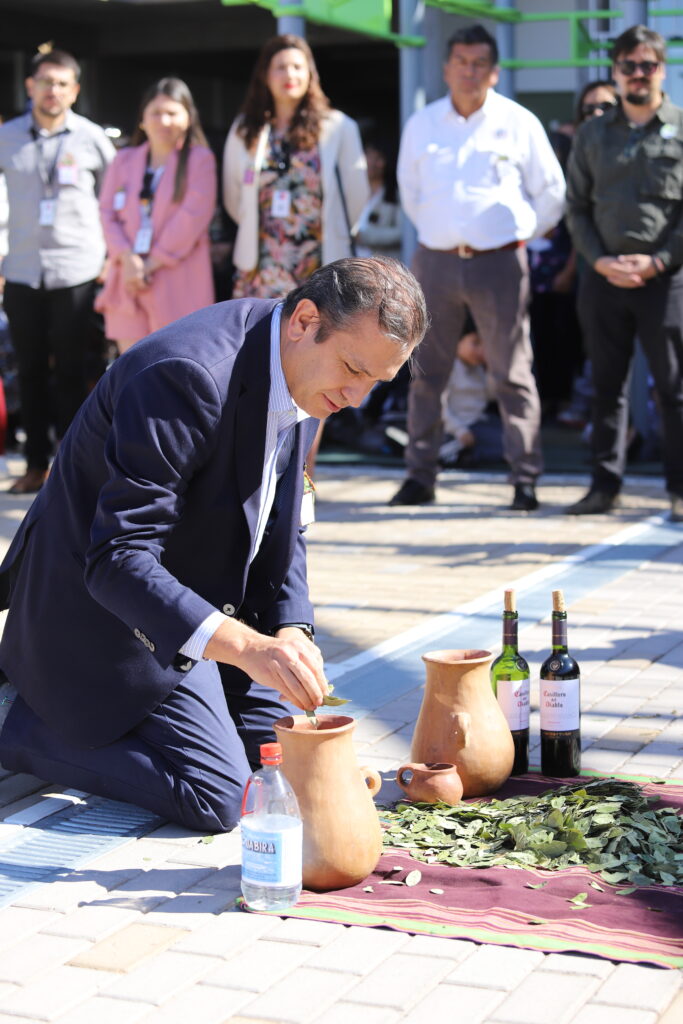
Carlos Díaz during ceremony “Pago a la Pachamama” (offering to Mother Earth) marking the start of the school year at the Toconao Educational Complex, together with the school community and local authorities. (Image: © SQM 2025)
How does SQM ensure the value from lithium production is shared locally?
Value sharing is a key part of our role in the Salar de Atacama and in Chile more broadly. For example, in 2022 alone, SQM contributed over USD 5 billion to public funds, including USD 3.3 billion in lease payments to CORFO. The agreement outlines payments to national, regional, and local governments, as well as direct contributions to Indigenous communities. It is likely one of the most significant value-sharing models in the global lithium industry.
In addition, SQM actively invests in regional development, supports local suppliers, and collaborates with universities and research institutions to strengthen innovation and human capital. A great example is our partnership with the Universidad Católica del Norte, where we helped launch the Lithium I+D+i Center, a hub for research, development, and innovation in lithium battery technologies.
What’s your favourite application of lithium, aside from batteries?
I’d probably say ceramics and glass, especially for induction cooktops. Not necessarily because I’m a passionate chef, but because it’s a great reminder that lithium is everywhere, not just in electric vehicles or smartphones. It’s in the kitchen, in satellites, even in medical devices, and it’s used as a mood stabilizer. I like how it connects high-tech innovation with everyday life.
In glass and ceramics, for example, lithium compounds help improve thermal shock resistance, reduce melting temperatures, and enhance durability. It’s that versatility that makes lithium so exciting. It’s not just a battery metal, it’s a material that quietly supports so many aspects of modern life.