We all appreciate that rechargeable lithium batteries can reduce the carbon footprint of transportation and energy storage, but did you know that refining lithium can also generate useful co-products, including one which can directly reduce the carbon footprint of one of the world’s most carbon-intensive industries: concrete?
More lithium. More co-products
Global lithium demand is growing rapidly and is expected to continue to increase at ~20% per year for the next decade. To meet the future demand for lithium a lot more mining and refining will be necessary. It is therefore important to have a clear understanding of the co-products that will be generated and the applications in which they may be used most effectively.
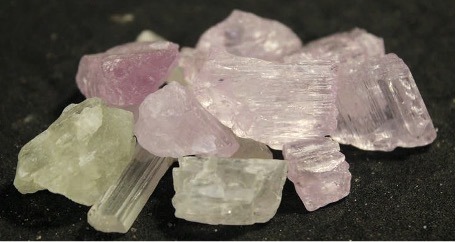
Currently around 60% of lithium is won from hard-rock minerals, of which the most important is spodumene (LiAlSi2O6). Spodumene crystals come in a range of pink, green and grey colours and can be found across the world, from Australia, China and Canada to Brazil and Zimbabwe.
The content of lithium oxide contained in spodumene is theoretically up to 8.03%, but commercial grades of spodumene concentrate are typically between 5% and 7% lithium oxide (Li2O), although lower grades are sometimes traded when markets are relatively high.
The most common way to extract the lithium from spodumene is to crush the rocks to a fine powder and heat it to 1000 to 1100°C (1830 – 2010°F). At this temperature the crystal structure changes its form from a monoclinic alpha (α) crystal to tetragonal beta (β) crystal, which allows the lithium atoms to be removed in a sulphuric acid roast process at 250°C.
Delithiated beta spodumene (DBS) sand
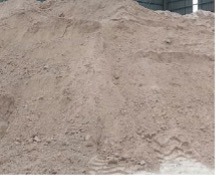
Once the lithium has been extracted as a sulphate, the remaining co-product is a sandy material with high levels of aluminium oxide and silicon dioxide called delithiated beta spodumene (DBS sand1).
Finding productive uses for DBS sand is important because it is undeniable that large quantities of it are generated when spodumene minerals are processed.
For example, refining 100kg of a spodumene concentrate containing 5.5% lithium oxide will generate 5.5kg of lithium oxide (equal to
~13.5kg of lithium carbonate equivalent (LCE)) and ~94.5kg of DBS sand co-product; a ratio of 7:1 DBS sand to LCE.
In Australia the availability of DBS sand is expected to significantly increase in the next five to 10 years when three major lithium refineries will be operation and hit full production capacity. It is estimated that there will be approximately 1 million tonnes of DBS sand produced per year in Western Australia. This volume is also expected to increase as the demand for lithium chemicals continues to rise and new refineries are built, or existing ones increase capacity.
There are many benefits to using DBS sand, not least in extracting the maximum value from the processed ore and offering a product with a very low carbon footprint (since the greenhouse gas emissions generated during spodumene processing are allocated to the product carbon footprint
of the lithium which is produced). Moreover, it does not usually contain harmful substances.
Applications for DBS sand
DBS sand has found a wide range of applications in China, where spodumene refining has been well established for several decades, and is increasingly finding uses in countries where spodumene processers are being constructed, too. Historically this was the case in the US too, where DBS sand from plants in North Carolina at Bessemer City and Kings Mountain was used to manufacture cement that resisted ‘concrete cancer’, believed to be due to traces of lithium still in the sand.
Some applications of DBS sand require that the product meets a certain chemical specification, but other uses have less stringent requirements. A brief search of scientific journals will clearly show that there are many other uses being studied for this abundant, cheap and low-carbon sand; a reassuring fact given that the global lithium industry is forecast to triple by 2040.
Established uses for DBS sand in China include:
- Replacing clay as calcined material in vertical kilns;
- As part of a cement mixture since DBS sand has pozzolanic properties (this has been demonstrated in the Australian standard AS3582.4:2022 Manufactured Pozzolans);
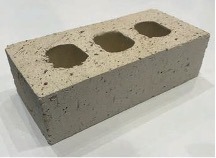
- As an input in the production of ceramic glazed bricks;
- As an input for fluorine gypsum lithium slag hollow mortar and blocks;
- To partially replace cement to prepare concrete (i.e. as a filler);
- As an input for making fibre glass;
- And as a filler in the base of roads and other constructions.
Case study #1: mine waste management
It is essential that mines do not collapse as minerals are extracted and one way to achieve this is to fill in cavities using mine waste.
Cemented paste backfill (CPB) in the mining industry has gained recognition as a highly promising technique for effective mine waste management in underground mining operations. A crucial component of CPB used in the mining industry is the binder, which is responsible for providing cohesion and strength to the backfill material.
At IGO’s Nova Operation in Western Australia, the company piloted a cement used for paste backfill which included DBS sand. The results exceeded expectations – both significantly reducing carbon emissions as well as demonstrating a remarkable 4% increase in CPB strength, highlighting the substantial potential of this product.

Case study #2: a reliable fill material for construction
Over the last five years the city of Perth, Western Australia, has seen a remarkable transformation of one of its commuter rail lines. After 130 years of running at ground level, the Armadale Line is now Perth’s first major elevated rail line. This project, the Victoria Park – Canning Level Crossing Removal Project, will reduce traffic congestion and deliver a safer, more accessible and connected city.
To create an elevated rail line a vast quantity of fill material was used to create embankments and DBS sand was widely employed in the sub-base as a 4:1 blended material. Using DBS sand not only avoided disposing of DBS sand but also reduced the consumption of virgin sand.
In summary: co-products bring value and opportunities
The lithium industry, driven by a strong commitment to ESG targets and a desire to maximize the value extracted from its products, are actively promoting the use of co-products. Owing to its pozzolanic properties, DBS sand shows great potential in several applications, including as a supplementary cementitious materials for use in lower-carbon concrete.
To date the use of DBS sand has mostly been in China, but this will change as lithium refineries are developed around the world in coming years.